

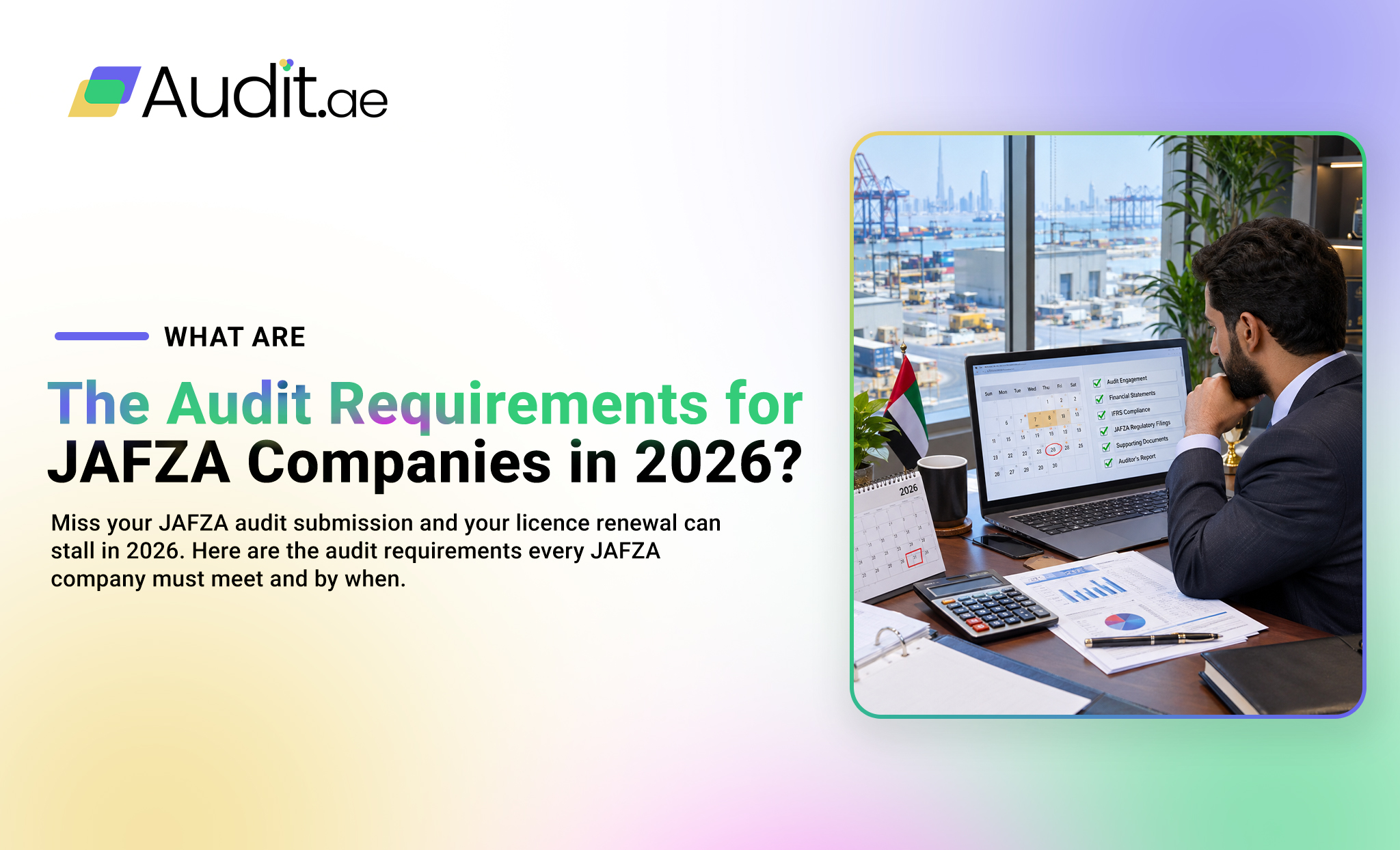
Many JAFZA business owners assume the audit is a formality they can handle near renewal. We correct that often at audit.ae. JAFZA is one of the oldest and most established free zones in the UAE, and its compliance expectations are firm. The JAFZA audit requirements are tied to your licence, so a late or missing audit does not just risk a fine. It can hold up the renewal your business runs on.
This guide sets out what JAFZA companies must do in 2026. Whether every company needs an audit. How JAFZA compares to DMCC. And when your report is due.
Do All JAFZA Companies Need an Annual Audit?
For most JAFZA companies the answer is yes. The JAFZA audit requirements generally expect member companies to prepare audited financial statements and submit them as a condition of holding and renewing the licence. The logic is simple. JAFZA wants assurance that its companies are financially sound and compliant. Audited accounts give that assurance.
So the audit is treated as a standing obligation rather than an optional extra. Even a company with a quiet year usually still needs to file. The free zone audit requirements in UAE rarely hinge on how busy you were. They hinge on your status as a licensed entity. If you are unsure whether your specific structure is exempt, confirm it with JAFZA rather than assuming inactivity lets you skip the filing.
What Do the JAFZA Audit Requirements Involve?
Meeting the JAFZA audit requirements means more than having numbers on a page. Your financial statements must be audited by an approved auditor and prepared to the expected standard. In practice this involves a few things. Your accounts must be prepared under IFRS, which is the standard across the UAE.
They must be audited by a firm JAFZA accepts. And they must be submitted through the correct channel within the set window. A report that is complete but filed late, or prepared by a firm JAFZA does not accept, can still cause a problem. This is where the free zone audit requirements in UAE reward preparation. A business that keeps clean records and engages its auditor early meets the standard without stress.
How Do JAFZA Audit Rules Compare With DMCC?
JAFZA and DMCC are both strict, but the details differ. Many businesses operate across more than one free zone, so understanding the contrast matters. The table below sets the two side by side.
| Feature | JAFZA | DMCC |
| Annual audit | Generally required for licence | Required and filed via portal |
| Approved auditor | Expected | DMCC approved auditors only, on its register |
| Submission | Through JAFZA’s channel | Through the DMCC Member Portal |
| Deadline basis | Set period after year end | Within a set window, extension on request |
| Renewal link | Audit tied to renewal | Renewal can be blocked without it |
The pattern is the same across both. The DMCC audit requirements lean heavily on an approved auditor register and portal filing. The JAFZA audit requirements focus on timely submission as a renewal condition. A company in both must satisfy each free zone separately. Never assume one free zone’s process matches the other, because the approved auditor rules and deadlines differ.
What Is the Deadline to Submit a JAFZA Audit Report?
Your JAFZA deadline depends on your financial year end. There is no single date that applies to everyone. A company closing its year on 31 December generally must submit its audited accounts within a set period after that date. The mistake we see most is treating this as flexible. It is not. A late submission can affect your licence renewal which is far more disruptive than any administrative issue.
Because free zone submission windows can change through circulars, confirm your exact 2026 deadline directly with JAFZA rather than relying on a general figure. The safe approach is to write down your year end, apply your JAFZA window and start the audit months ahead. The companies that never face a renewal problem are simply the ones that knew their date early.
Why Early Preparation Protects Your Licence
The real risk in the JAFZA audit requirements is not difficulty. It is timing. A business that leaves the audit late inherits a scramble that an early start would have avoided entirely.
When you prepare ahead, the audit is routine. Your books are clean, your auditor has time and your submission goes in before the window closes. When you leave it late, a single missing record can push you past the deadline and stall your renewal. In our experience the JAFZA companies that stay clear of trouble treat the audit as a year-round discipline, not a year-end task. This is exactly where audit.ae supports free zone clients, keeping records audit-ready and managing the submission so the deadline is never a surprise.
Conclusion
The JAFZA audit requirements in 2026 come down to three things. Most JAFZA companies need an annual audit. The accounts must be audited by an accepted firm and prepared properly. And the report must reach JAFZA within your deadline, which is set by your financial year end. Like the DMCC audit requirements, the JAFZA rules tie the audit to your licence, so missing it puts your renewal at risk.
The way to stay clear is early preparation. Confirm your deadline, keep clean records and engage an approved auditor well ahead of time. If you want your JAFZA audit handled from preparation through to submission, audit.ae can manage the process so your licence stays secure.
Tip: confirm your JAFZA submission deadline the moment your financial year closes and work backward from it. Most free zone renewal delays come from a business discovering its audit deadline too late to prepare properly. Contact Us Today.
Frequently Asked Questions
Most JAFZA companies are required to prepare and submit audited financial statements to maintain and renew their licences. This requirement generally applies even if the company has had limited or no business activity during the financial year.
Both JAFZA and DMCC require companies to comply with their respective audit and financial reporting requirements. DMCC uses an approved auditor register and online portal for filing, while JAFZA has its own auditor acceptance and financial statement submission procedures.
The JAFZA audit submission deadline depends on the company’s financial year-end and the applicable free zone requirements. Companies should confirm their specific 2026 filing deadline directly with JAFZA to avoid late submission or licence renewal issues.
A JAFZA company must appoint an auditor that meets JAFZA’s eligibility and acceptance requirements and is qualified to practise in the UAE. Confirm that the audit firm is accepted by JAFZA before engagement to avoid issues with report submission.


