

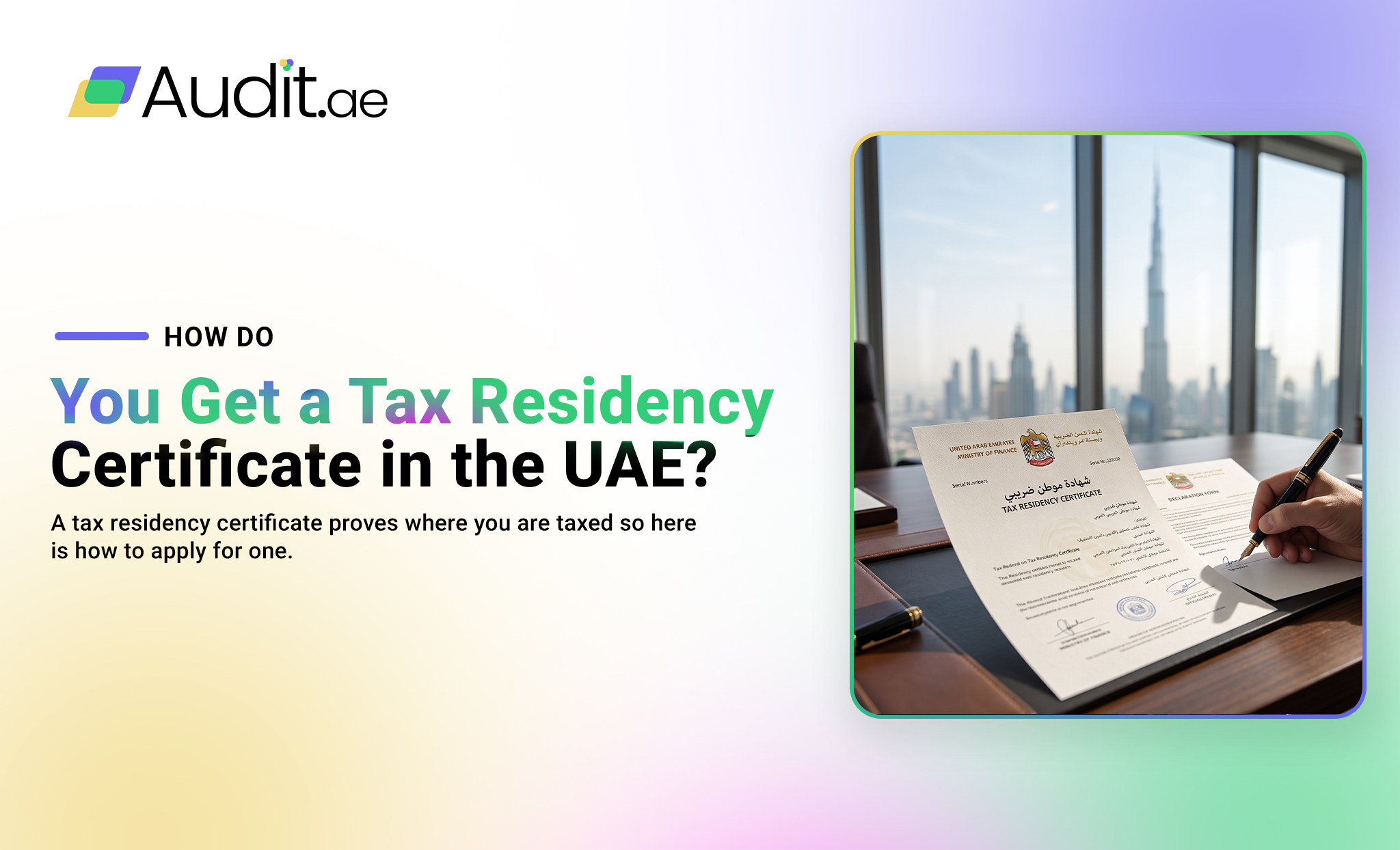
Businesses often come to us at audit.ae only after a foreign tax office has asked for proof. They need to show they are tax resident in the UAE and they have nothing on hand. A tax residency certificate in UAE is the document that proves it. Without it you can lose treaty benefits and face tax twice on the same income. The certificate is straightforward to obtain once you know what it needs. This guide explains how audt.ae can help who qualifies what to prepare and how long it takes.
What Is a Tax Residency Certificate and Why Does It Matter?
A tax residency certificate in UAE is an official document confirming that a person or company is a tax resident here. It is issued by the Federal Tax Authority and is used mainly to claim benefits under the UAE’s double tax treaties.
Why it matters is simple. Many countries will only grant treaty relief if you can prove where you are a tax resident. The certificate is that proof. Without it a foreign authority may tax income that a treaty would otherwise protect for a company trading across borders that is a real and avoidable cost.
Who Is Eligible for a UAE Tax Residency Certificate?
Eligibility depends on whether you are applying as a company or an individual. Both can qualify, but the conditions differ. A company generally needs to have been established and operating in the UAE for a set period and to hold a valid trade licence.
An individual usually needs to show they have resided in the UAE for a qualifying number of days and hold valid residency. Meeting these conditions is also tied to your wider standing, since a business applying should have its corporate tax compliance in UAE in order. A company that is behind on its filings is in a weaker position to prove it is a genuine resident taxpayer.
What Documents Are Required to Apply?
A typical company application includes:
- Valid trade licence
- Audited financial statements
- A lease or tenancy contract for the UAE premises
- Bank statements for the relevant period
- Copies of owner and manager passports and IDs
An individual application usually includes a passport, residency visa, Emirates ID, a tenancy contract and bank statements showing presence in the UAE. The exact list can vary with your case so confirm the current requirements before applying. A company with current records and a completed audit finds this stage simple, which is one more reason good corporate tax compliance in UAE pays off beyond the tax return itself.
How Long Does It Take to Receive the Certificate?
Processing is reasonably quick once your application is complete and your documents are in order. The main variable is you not the authority. A prepared application with a complete document set moves through without delay. An application missing a document or waiting on an audit stretches out while the gap is filled.
This is why preparation matters more than speed. Because processing times can shift, treat any timeframe as a guide and confirm the current turnaround with the Federal Tax Authority. The practical lesson from experience is clear. The applicants who receive their certificate quickly are the ones who had their records ready before they applied.
How Does This Connect to Your Wider Tax Obligations?
The certificate does not sit on its own. It reflects whether your business is genuinely resident and compliant here. So it ties closely to the rest of your obligations. A company seeking the certificate should already be registered and current on its filings. Missing your corporate tax registration deadline in UAE weakens your position, since registration is part of proving you are a compliant resident taxpayer.
In our experience the businesses that struggle with the certificate are often the same ones behind on registration or audit. Getting the foundations right first makes the certificate straightforward. This is exactly where audit..ae helps by ensuring your registration, audit and records are in order, so the certificate application is a formality rather than a scramble.
Conclusion
A tax residency certificate in UAE is what lets your business claim treaty benefits and avoid being taxed twice abroad. It is issued by the Federal Tax Authority, it depends on proving genuine UAE residence and it rests on having your records and filings in order.
The path is simple when your foundations are sound. Confirm your eligibility, prepare a complete document set and make sure your wider compliance is current first. If you want the certificate handled alongside your audit and tax. Contact us we can prepare your application and keep the underlying compliance in order so it clears without friction.
Tip: apply for your certificate only after your audit and filings are current. Most delays come not from the authority but from an applicant waiting on an audited statement or a missing document.
Frequently Asked Questions
Both companies and individuals can qualify for a UAE Tax Residency Certificate. A company generally needs to be established in the UAE with a valid trade licence, while an individual must meet the applicable UAE tax residency requirements and provide valid residency documents.
A company typically needs its trade licence, audited financial statements, tenancy contract, and bank statements. An individual generally needs a passport, UAE residence visa, Emirates ID, tenancy agreement, and bank statements. Additional documents may be required depending on the applicant’s circumstances.
The processing time depends on the application and supporting documents. Complete applications are generally processed more smoothly, while missing information, incomplete records, or pending audits can cause delays.
A UAE Tax Residency Certificate is issued for a specific tax period. You need to submit a new application when you require proof of tax residency for another period, such as a subsequent financial year.


